Understanding Consensus Mechanisms: How Blockchain Networks Reach Agreement
Explore the technical foundations that enable decentralized networks to validate transactions and maintain security without central authority. This comprehensive guide examines Proof of Work, Proof of Stake, and emerging consensus models that power modern blockchain systems.

The Foundation of Decentralized Trust
In traditional financial systems, central authorities like banks and payment processors validate transactions and maintain ledgers. These institutions serve as trusted intermediaries, ensuring that funds are transferred correctly and preventing issues like double-spending. However, blockchain technology introduces a fundamentally different approach: decentralized consensus mechanisms that allow networks of independent participants to agree on the state of a shared ledger without requiring a central authority.
Consensus mechanisms are the protocols that enable this distributed agreement. They define the rules by which network participants validate new transactions, add blocks to the blockchain, and maintain the integrity of the entire system. Understanding these mechanisms is essential for anyone seeking to comprehend how blockchain networks function at a technical level.
The challenge these mechanisms address is significant: how can thousands of independent computers, operated by parties who may not trust each other, reach agreement on which transactions are valid? The solution must prevent malicious actors from manipulating the ledger while remaining efficient enough to process transactions at scale. Different blockchain networks have developed various approaches to solving this problem, each with distinct technical characteristics and trade-offs.
This article examines the major consensus mechanisms currently in use, explaining how they work, their security properties, and the technical considerations that influence their design. By understanding these foundational protocols, readers can better evaluate the capabilities and limitations of different blockchain systems.
Proof of Work: Computational Security Through Mining
Proof of Work (PoW) is the original consensus mechanism introduced by Bitcoin in 2009. This protocol requires network participants, called miners, to perform intensive computational work to validate transactions and create new blocks. The process involves solving complex mathematical puzzles that require significant processing power but produce solutions that are easy for other network participants to verify.

The technical mechanism works as follows: miners collect pending transactions into a candidate block and then attempt to find a specific number (called a nonce) that, when combined with the block's data and processed through a cryptographic hash function, produces a result meeting certain criteria. Specifically, the hash must be below a target value, which determines the difficulty of the puzzle. Finding this nonce requires trying billions or trillions of different values until one produces a valid hash.
When a miner successfully finds a valid nonce, they broadcast the new block to the network. Other participants can quickly verify that the solution is correct by performing a single hash calculation. If the block is valid and builds on the longest chain, other miners accept it and begin working on the next block. This process creates a chain of blocks, each cryptographically linked to the previous one, forming the blockchain.
The security of Proof of Work derives from the computational cost of creating blocks. To alter historical transactions, an attacker would need to redo all the computational work for that block and every subsequent block, while simultaneously outpacing the honest miners working on the legitimate chain. As long as the majority of computational power is controlled by honest participants, this attack becomes economically and technically infeasible.
However, Proof of Work has notable limitations. The computational requirements consume substantial electrical energy, raising environmental concerns. The mechanism also tends toward centralization, as miners with access to cheaper electricity and specialized hardware gain competitive advantages. Additionally, transaction throughput is limited by the time required to solve each puzzle and propagate blocks across the network. These characteristics have led to the development of alternative consensus mechanisms.
Proof of Stake: Economic Security Through Staking
Proof of Stake (PoS) represents a fundamentally different approach to consensus, replacing computational work with economic stake. In this mechanism, validators are selected to create new blocks based on the amount of cryptocurrency they hold and are willing to "stake" as collateral. Rather than competing through computational power, validators are chosen through various selection algorithms that consider factors like stake size, randomization, and time held.
The technical implementation varies across different Proof of Stake systems, but the core principle remains consistent: validators must lock up a significant amount of the network's native cryptocurrency as a security deposit. This staked amount serves as collateral that can be partially or fully forfeited (a process called "slashing") if the validator behaves maliciously or fails to perform their duties correctly. The economic incentive structure encourages honest behavior, as validators have a direct financial stake in the network's security and proper operation.

When selected to propose a block, a validator collects pending transactions, creates a new block, and broadcasts it to the network. Other validators then attest to the validity of this block by signing it with their cryptographic keys. Once a sufficient number of validators have attested to a block (typically representing a supermajority of the total staked amount), the block is considered finalized and added to the blockchain. This process typically occurs much faster than Proof of Work mining, as it doesn't require solving computational puzzles.
Proof of Stake offers several technical advantages over Proof of Work. Energy consumption is dramatically reduced, as validators only need to run standard computer hardware rather than specialized mining equipment. The mechanism also enables faster block times and higher transaction throughput. Additionally, the economic penalties for malicious behavior create strong disincentives against attacks, as an attacker would need to acquire and stake a large portion of the total cryptocurrency supply, which would be destroyed if their attack were detected.
However, Proof of Stake introduces its own technical challenges. The "nothing at stake" problem describes a scenario where validators might attempt to validate multiple competing chains simultaneously, as doing so costs them nothing in computational resources. Various solutions have been developed to address this, including slashing conditions that penalize validators who sign conflicting blocks. Another consideration is the initial distribution of stake, as early holders of large amounts of cryptocurrency gain significant influence over the network's consensus process.
Consensus Process Flow
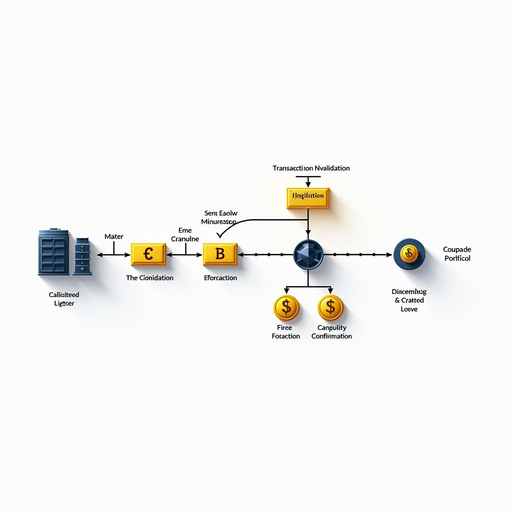
Diagram Key:This flowchart illustrates the general consensus process applicable to most blockchain networks. The process begins with transaction submission, proceeds through validation by network participants, includes block creation and propagation, and concludes with finalization once sufficient confirmations are received. Specific implementation details vary between Proof of Work and Proof of Stake systems.
Emerging Consensus Models and Hybrid Approaches
Beyond the two dominant mechanisms, blockchain developers have created numerous alternative and hybrid consensus protocols designed to address specific technical requirements or optimize for particular use cases. These emerging models demonstrate the ongoing evolution of consensus mechanism design and the diverse approaches to solving the distributed agreement problem.
Delegated Proof of Stake (DPoS) introduces a representative layer to the consensus process. Token holders vote to elect a limited number of delegates who are responsible for validating transactions and creating blocks. This approach can achieve higher transaction throughput and faster block times compared to traditional Proof of Stake, as the smaller validator set can coordinate more efficiently. However, it introduces a degree of centralization, as the network's security depends on a relatively small number of elected delegates.
Practical Byzantine Fault Tolerance (PBFT) and its variants represent another category of consensus mechanisms, particularly suited for permissioned blockchain networks. These protocols enable a network to reach consensus even when some participants behave maliciously or fail to respond, as long as fewer than one-third of nodes are faulty. PBFT-based systems can achieve high throughput and fast finality but typically require a known set of validators and don't scale well to very large networks.
Proof of Authority (PoA) takes a different approach by designating specific entities as authorized validators based on their reputation or identity. This mechanism is commonly used in private or consortium blockchains where participants are known and trusted to some degree. While PoA sacrifices the permissionless nature of public blockchains, it offers high performance and energy efficiency for use cases where a fully decentralized consensus process isn't required.
Hybrid consensus mechanisms combine elements from multiple approaches to balance different technical requirements. For example, some networks use Proof of Work for initial block creation but require Proof of Stake validation for finalization. Others implement layered consensus, where different mechanisms operate at different levels of the network architecture. These hybrid approaches demonstrate that consensus mechanism design involves complex trade-offs between security, decentralization, scalability, and energy efficiency.
Technical Considerations and Trade-offs
Evaluating consensus mechanisms requires understanding the fundamental trade-offs inherent in distributed system design. The blockchain trilemma, a concept widely discussed in the technical community, suggests that blockchain systems can optimize for at most two of three properties: decentralization, security, and scalability. Consensus mechanisms play a central role in navigating these trade-offs.
Decentralization refers to the distribution of control and validation power across the network. Highly decentralized systems allow anyone to participate in consensus without permission, but this openness can limit throughput and increase coordination complexity. Mechanisms like Proof of Work and Proof of Stake aim for high decentralization, though practical implementations often show concentration among large miners or validators. More centralized approaches like Delegated Proof of Stake or Proof of Authority can achieve higher performance but concentrate power among fewer participants.
Security encompasses the network's resistance to various attack vectors, including double-spending, censorship, and manipulation of transaction history. Different consensus mechanisms provide security through different means: Proof of Work through computational cost, Proof of Stake through economic penalties, and Byzantine Fault Tolerant protocols through mathematical guarantees about fault tolerance. The security model must account for both external attacks and potential collusion among network participants.
Scalability measures the network's ability to process transactions efficiently as usage grows. This includes transaction throughput (transactions per second), block time (how quickly new blocks are created), and finality time (how long until transactions are irreversible). Proof of Work systems typically have lower throughput due to computational requirements and the need for multiple confirmations. Proof of Stake and other mechanisms can achieve higher throughput but may make different security trade-offs to do so.
Energy consumption has become an increasingly important consideration in consensus mechanism design. Proof of Work's computational requirements result in substantial electricity usage, leading to environmental concerns and ongoing debates about sustainability. Proof of Stake and other alternative mechanisms dramatically reduce energy consumption by eliminating the need for intensive computation. This efficiency gain has influenced the design choices of newer blockchain networks and prompted some existing networks to transition from Proof of Work to Proof of Stake.
Understanding Consensus in Context
Consensus mechanisms represent one of the most significant technical innovations in blockchain technology. By enabling distributed networks to reach agreement without central authority, these protocols make decentralized systems possible. Each mechanism approaches the consensus problem differently, reflecting distinct technical philosophies and priorities.
Proof of Work established the viability of decentralized consensus through computational security, demonstrating that economic incentives and cryptographic techniques could replace traditional trusted intermediaries. Proof of Stake refined this approach by substituting economic stake for computational work, addressing energy concerns while maintaining security through different means. Emerging mechanisms continue to explore new points in the design space, optimizing for specific use cases or attempting to overcome limitations of earlier approaches.
For those learning about blockchain technology, understanding consensus mechanisms provides insight into how these systems function at a fundamental level. The choice of consensus mechanism influences a blockchain's performance characteristics, security properties, and governance structure. It affects who can participate in validation, how quickly transactions are processed, and what resources are required to maintain the network.
As blockchain technology continues to evolve, consensus mechanism design remains an active area of research and development. New protocols are being proposed and tested, each attempting to find better solutions to the fundamental challenge of distributed agreement. Understanding the principles behind existing mechanisms provides a foundation for evaluating these innovations and comprehending the technical capabilities of different blockchain networks.
The study of consensus mechanisms reveals the complex engineering challenges involved in building decentralized systems. These protocols must balance competing requirements, make careful trade-offs, and provide robust security guarantees in adversarial environments. By examining how different mechanisms address these challenges, we gain appreciation for the technical sophistication underlying blockchain networks and the ongoing efforts to improve their capabilities.
Educational Note:This article provides technical information about consensus mechanisms for educational purposes. Understanding these protocols helps readers comprehend how blockchain networks function but does not constitute technical advice for implementing blockchain systems or participating in cryptocurrency networks. Consensus mechanism design involves complex technical considerations that require specialized expertise.