Understanding Smart Contracts and Decentralized Applications
A comprehensive introduction to self-executing code and programmable agreements on blockchain networks
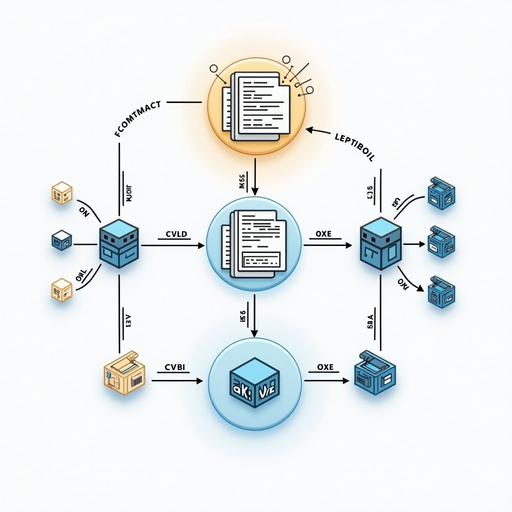
Smart contracts and decentralized applications represent a fundamental shift in how digital agreements and software systems operate. This introductory course breaks down these complex concepts into accessible terms, helping you understand the technology that powers programmable blockchain networks and automated trustless systems.
What Are Smart Contracts?
At their core, smart contracts are self-executing pieces of code stored on a blockchain network. Unlike traditional contracts that require intermediaries to enforce terms, smart contracts automatically execute predefined actions when specific conditions are met. Think of them as digital vending machines: you input the correct amount, select your item, and the machine automatically dispenses your purchase without requiring a human operator.
The term "smart contract" was coined by computer scientist Nick Szabo in the 1990s, long before blockchain technology existed. However, it wasn't until the emergence of programmable blockchain platforms that these concepts became practically implementable. Today, smart contracts form the foundation of numerous blockchain applications, enabling automated, transparent, and tamper-resistant digital agreements.
Key Concept:Smart contracts eliminate the need for trusted third parties by encoding agreement terms directly into executable code that runs on a decentralized network.
Smart contracts operate on blockchain networks, which means they inherit the key properties of blockchain technology: immutability, transparency, and decentralization. Once deployed, a smart contract's code cannot be altered, ensuring that all parties can trust the agreement will execute exactly as programmed. Every transaction and state change is recorded on the blockchain, providing complete transparency and auditability.
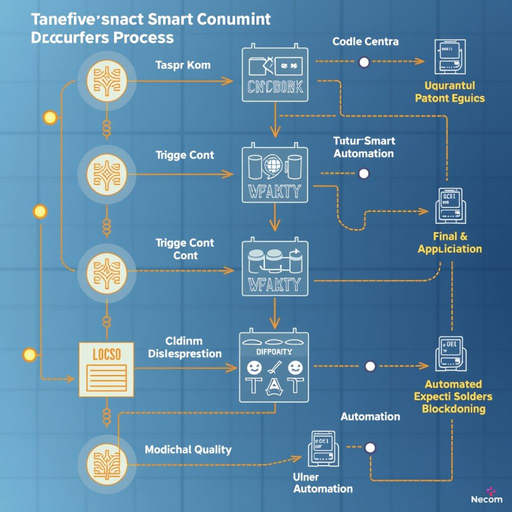
How Smart Contracts Work: Basic Programming Logic
Understanding smart contracts doesn't require advanced programming knowledge, but grasping the basic logic helps demystify how they function. Smart contracts are written in specialized programming languages designed for blockchain platforms. The most widely used language is Solidity, created for the Ethereum blockchain, though other platforms use different languages.
The fundamental structure of a smart contract follows simple "if-then" logic. For example: "IF Alice sends 10 tokens to the contract AND Bob confirms receipt of goods, THEN release the tokens to Bob." This conditional logic can become more complex, incorporating multiple conditions, time-based triggers, and interactions with other contracts, but the underlying principle remains straightforward.
Key Components of Smart Contract Logic
- State Variables:Data stored permanently on the blockchain that represents the contract's current status
- Functions:Executable code blocks that perform specific actions when called
- Events:Signals emitted by the contract to notify external applications of important occurrences
- Modifiers:Conditions that must be met before a function can execute
- Constructors:Special functions that run once when the contract is first deployed
When someone interacts with a smart contract, they send a transaction to the blockchain network. This transaction includes instructions about which function to call and what parameters to provide. Network nodes then execute the contract code, verify the results, and update the blockchain state accordingly. Because this process happens across a distributed network of computers, no single entity controls the execution or can manipulate the outcome.
Smart contracts can also interact with each other, creating complex systems of interconnected agreements. This composability allows developers to build sophisticated applications by combining multiple contracts, each handling specific functions. For instance, a decentralized lending platform might use separate contracts for managing user accounts, calculating interest rates, and handling collateral.
Understanding Decentralized Applications (DApps)
Decentralized applications, commonly called DApps, are software applications that run on blockchain networks rather than centralized servers. While traditional applications store data and execute logic on servers controlled by a single organization, DApps distribute these functions across a peer-to-peer network. Smart contracts form the backend logic of DApps, handling data storage and business rules on the blockchain.
How DApps Differ from Traditional Applications
The fundamental difference between DApps and traditional applications lies in their architecture and control structure. Traditional applications typically follow a client-server model where users interact with a frontend interface that communicates with backend servers owned and operated by a company. This centralized structure means the company controls user data, can modify the application at will, and serves as a single point of failure.
DApps, by contrast, use a frontend interface that connects directly to smart contracts on a blockchain network. The application logic encoded in these smart contracts executes on thousands of network nodes simultaneously, making it virtually impossible for any single party to control or shut down the application. Users typically maintain control of their own data through cryptographic keys, rather than trusting a central authority to manage their information.
Decentralized
No single entity controls the application or its data
Transparent
All code and transactions are publicly verifiable
Trustless
Users don't need to trust a central authority
Another key distinction involves data permanence and censorship resistance. Traditional applications can delete user data, modify historical records, or restrict access to certain users. DApps store data on immutable blockchains, meaning historical records cannot be altered or erased. While this creates challenges for privacy and data management, it also ensures that no authority can arbitrarily censor content or revoke access.
Common Use Cases Across Industries
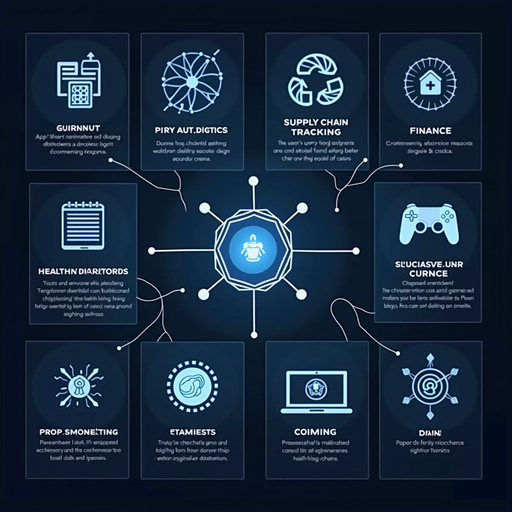
Smart contracts and DApps have found applications across numerous industries, each leveraging the technology's unique properties to solve specific problems. Understanding these use cases helps illustrate the practical implications of programmable blockchain systems and their potential to transform various sectors.
Financial Services and Decentralized Finance
The financial sector has seen the most extensive adoption of smart contract technology through decentralized finance (DeFi) applications. These platforms recreate traditional financial services like lending, borrowing, trading, and asset management without requiring banks or financial intermediaries. Smart contracts automatically execute financial agreements, calculate interest, manage collateral, and settle transactions based on predefined rules.
Decentralized exchanges use smart contracts to facilitate peer-to-peer trading of digital assets without a central authority holding user funds. Lending protocols allow users to deposit assets and earn interest or borrow against their holdings, with smart contracts automatically managing loan terms, collateral requirements, and liquidations. These applications demonstrate how programmable agreements can automate complex financial operations while maintaining transparency and reducing counterparty risk.
Supply Chain and Logistics
Supply chain management represents another promising application area for smart contracts. These systems can track products from manufacture through delivery, automatically updating records as items move through the supply chain. Smart contracts can trigger payments when goods reach specific locations, verify authenticity through immutable records, and ensure compliance with contractual terms at each stage of the process.
For example, a smart contract might automatically release payment to a supplier when sensors confirm that a shipment has arrived at its destination in proper condition. This automation reduces paperwork, minimizes disputes, and provides all parties with real-time visibility into the supply chain. The transparency of blockchain records also helps combat counterfeiting by creating verifiable proof of a product's origin and journey.
Digital Identity and Credentials
Smart contracts enable new approaches to digital identity management, allowing individuals to control their own identity data rather than relying on centralized authorities. DApps can verify credentials, manage access permissions, and facilitate identity-based transactions without exposing unnecessary personal information. This self-sovereign identity model gives users greater privacy and control while still enabling necessary verification processes.
Educational institutions, professional organizations, and government agencies are exploring blockchain-based credential systems where smart contracts issue and verify certificates, licenses, and qualifications. These systems make credential verification instant and tamper-proof while reducing administrative overhead and preventing fraud.
Automated Trustless Systems: Implications and Considerations
The concept of trustless systems represents a paradigm shift in how we think about digital agreements and automated processes. In traditional systems, trust is placed in institutions, intermediaries, or authorities to execute agreements fairly and maintain accurate records. Smart contracts shift this trust from people and organizations to code and cryptographic protocols.
This transformation carries significant implications. On one hand, trustless systems can reduce costs, increase efficiency, and provide access to services for people who lack access to traditional institutions. They can operate 24/7 without human intervention, execute agreements with perfect consistency, and create transparent audit trails. These properties make them particularly valuable in situations where parties don't know or trust each other, or where traditional intermediaries are expensive or unavailable.
Challenges and Limitations
However, trustless systems also introduce new challenges and limitations. Smart contracts are only as good as their code, and programming errors can lead to significant problems. Unlike traditional contracts where human judgment can resolve ambiguities or adapt to unforeseen circumstances, smart contracts execute exactly as programmed, even if that leads to unintended outcomes. Several high-profile incidents have demonstrated how coding vulnerabilities can be exploited, resulting in substantial losses.
Important Consideration:Smart contracts cannot be easily modified after deployment. This immutability ensures trust but also means bugs or vulnerabilities cannot be quickly patched like traditional software.
The immutability of smart contracts creates a double-edged sword. While it prevents tampering and ensures agreements execute as intended, it also means mistakes are permanent. Developers have created various mechanisms to address this limitation, such as upgradeable contract patterns and governance systems that allow controlled modifications, but these solutions introduce their own complexities and potential vulnerabilities.
Another consideration involves the "oracle problem" – smart contracts can only access data available on the blockchain, but many real-world applications require external information. Oracles are services that feed external data to smart contracts, but they introduce a point of centralization and potential manipulation. Ensuring reliable, tamper-resistant data feeds remains an ongoing challenge for many DApp use cases.
Scalability and Performance
Current blockchain networks face scalability limitations that affect smart contract and DApp performance. Processing transactions across thousands of nodes is inherently slower and more expensive than centralized systems. Network congestion can lead to high transaction fees and slow execution times, making some applications impractical for everyday use. Various scaling solutions are being developed, including layer-2 networks and alternative consensus mechanisms, but these remain works in progress.
The user experience of DApps also differs significantly from traditional applications. Users must manage cryptographic keys, pay transaction fees in cryptocurrency, and understand blockchain concepts to interact effectively with these systems. While interfaces are improving, the technical complexity still presents barriers to mainstream adoption.
The Future of Programmable Agreements
Smart contracts and decentralized applications represent an evolving technology with significant potential to reshape digital systems and agreements. As the technology matures, we're likely to see improvements in scalability, security, and usability that address current limitations. Development tools are becoming more sophisticated, making it easier to build and audit smart contracts. Standards and best practices are emerging to help developers avoid common pitfalls.
Integration with other emerging technologies could expand smart contract capabilities. Combining blockchain with artificial intelligence might enable more sophisticated automated decision-making. Internet of Things devices could trigger smart contract execution based on real-world events, creating seamless connections between physical and digital systems. These convergences could unlock new applications we haven't yet imagined.
Regulatory frameworks are also evolving to address smart contracts and DApps. As governments and institutions develop clearer guidelines, we may see increased adoption in regulated industries. Legal recognition of smart contracts as enforceable agreements could bridge the gap between traditional legal systems and blockchain-based automation.
Learning and Exploration
For those interested in learning more about smart contracts and DApps, numerous resources are available. Many blockchain platforms offer documentation, tutorials, and development tools for beginners. Online courses cover everything from basic concepts to advanced smart contract programming. Testnet environments allow experimentation without risking real assets, providing safe spaces to learn by doing.
Understanding smart contracts doesn't require becoming a programmer, but grasping the fundamental concepts helps anyone navigate the evolving digital landscape. As these technologies continue to develop and find new applications, basic literacy in how they work becomes increasingly valuable. Whether you're interested in technology, business, law, or simply understanding the systems shaping our digital future, smart contracts and decentralized applications represent important concepts worth exploring.
Key Takeaways
- Smart contracts are self-executing code that automates agreements on blockchain networks
- DApps use smart contracts as backend logic, running on decentralized networks instead of central servers
- Applications span multiple industries including finance, supply chain, and digital identity
- Trustless systems eliminate intermediaries but introduce new technical challenges
- The technology continues evolving with improvements in scalability, security, and usability
Smart contracts and decentralized applications represent more than just technological innovations – they embody a different philosophy about how digital systems should operate. By encoding trust in transparent, immutable code rather than centralized authorities, they offer an alternative model for coordination and agreement. While challenges remain and the technology continues to mature, understanding these concepts provides valuable insight into potential futures for digital interaction and automated systems.
As you continue exploring blockchain technology and its applications, remember that smart contracts and DApps are tools with specific strengths and limitations. They excel in situations requiring transparency, automation, and trustless execution, but may not be the best solution for every problem. Evaluating when and how to apply these technologies requires understanding both their capabilities and constraints, along with the specific requirements of each use case.